Le città del mondo
Opening in Florence, at La Fonderia Art Gallery, is Claudio Cionini’s solo exhibition “Le città del Mondo” (Cities of the World), on Friday, November 8th at 6:00 PM, in the presence of the artist and the journalist and art critic Riccardo Ferrucci.
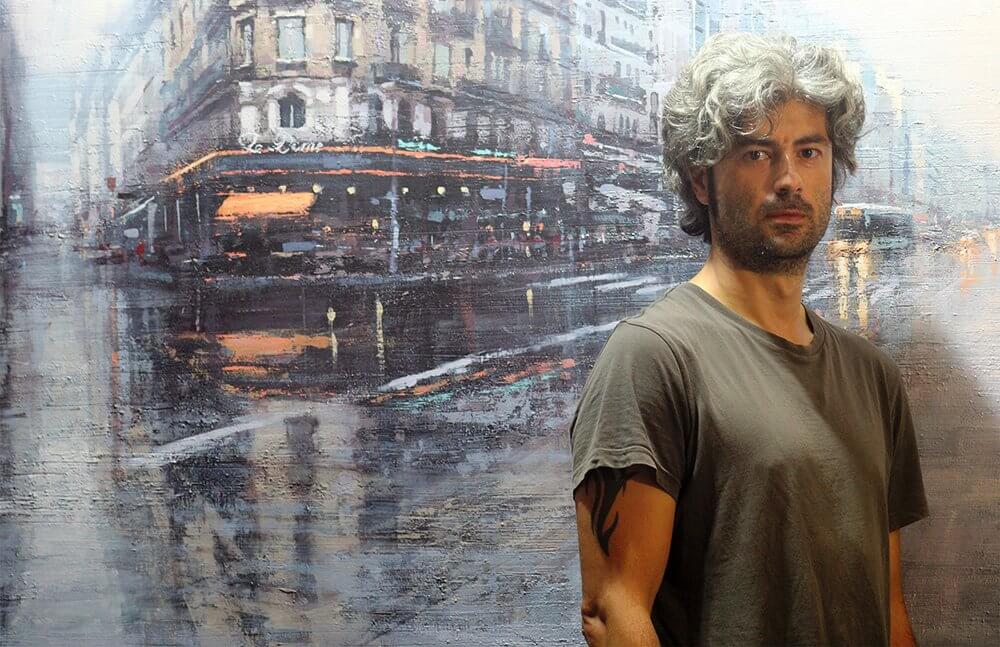
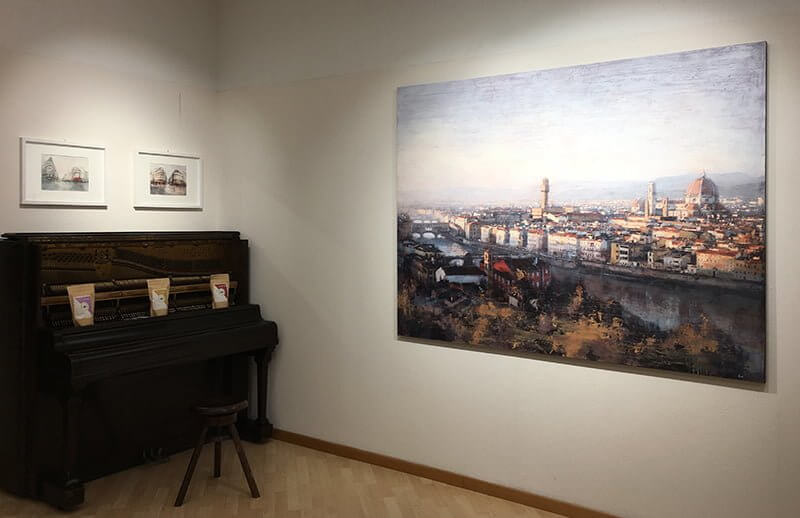
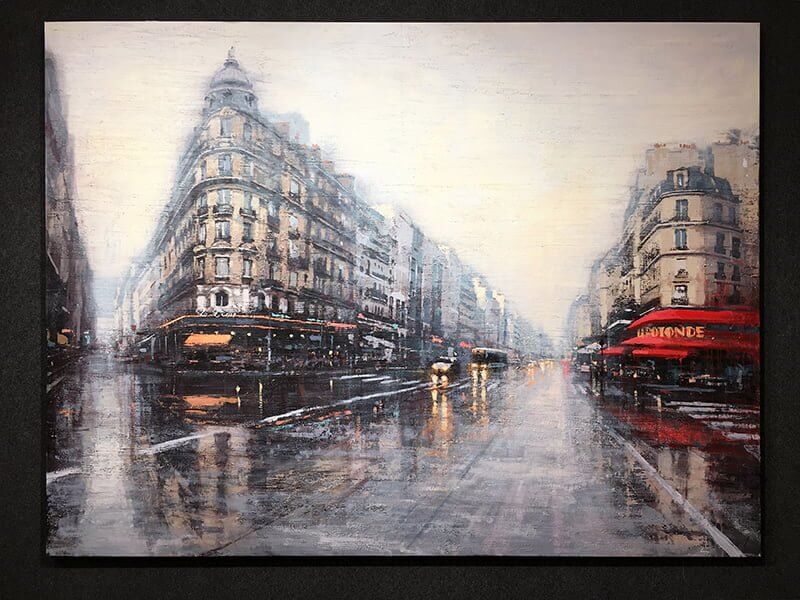
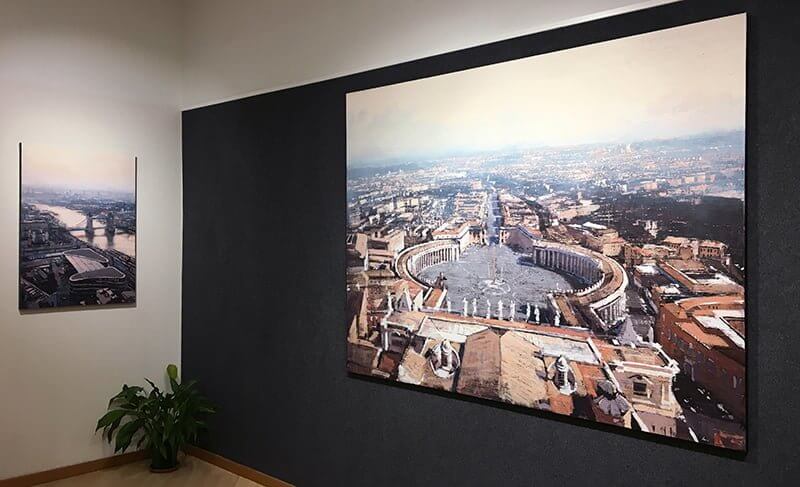
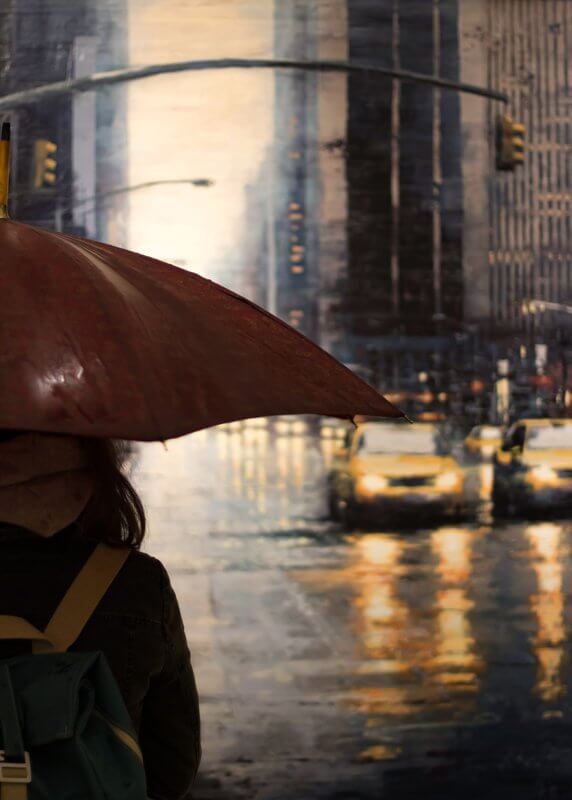
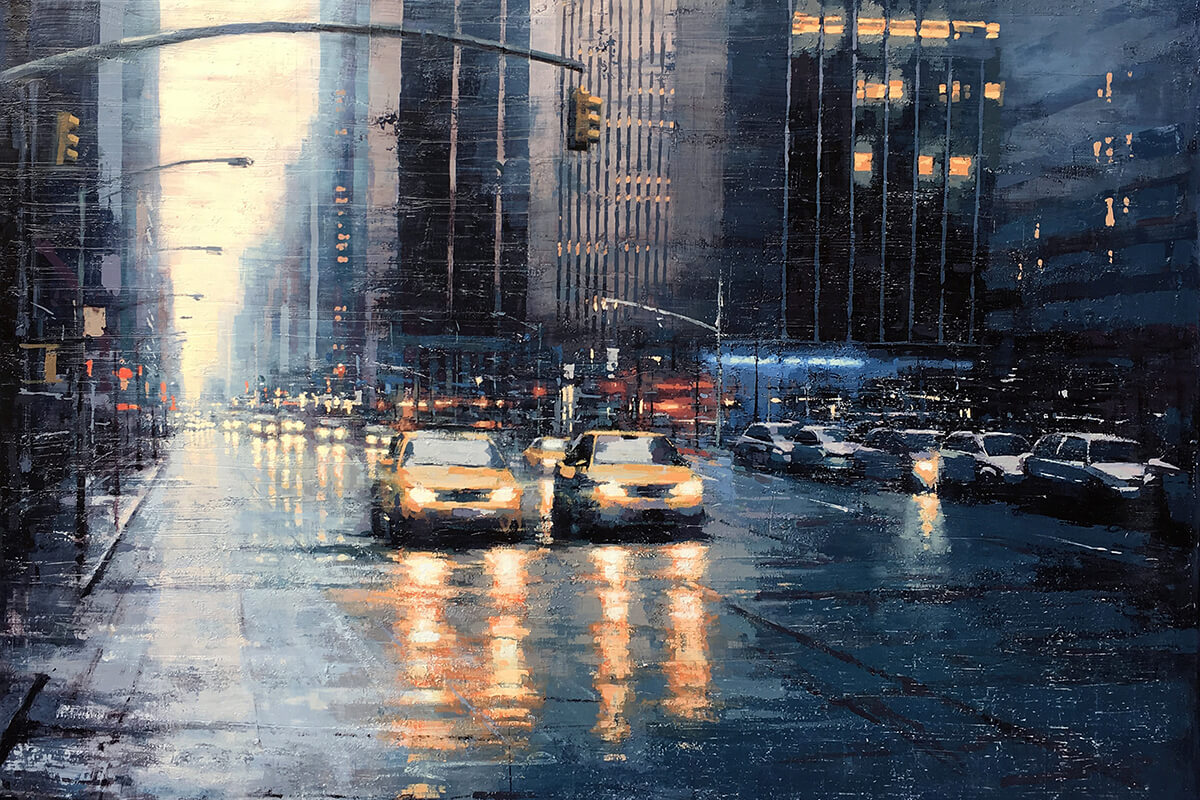
Claudio Cionini’s exhibition Le città del mondo is an act of love toward major cities—a privileged theme for our author—unfolding through a work in six acts that develops with the images of six large-scale paintings dedicated to Florence, Rome, Berlin, Paris, London, and New York. For Cionini, traveling through cities becomes a personal means to depict reality and his own time, suspended between imagination and vision. It is a process of losing and finding oneself in beloved places that represent the history of humanity and its civilization, despite the fact that direct human presence is absent from these images. It resembles the composition of an opera, with an expansive score capable of capturing fragments of truth and secret loves, in a song that at times unfolds aloud and at others fades into a faint whisper.
Looking at these paintings, it comes naturally to think of Elio Vittorini’s novel Le città del mondo, where shepherds, puppet masters, young brides, and prostitutes are portrayed amidst an endless wandering through the cities of Sicily—which are “the cities of the world,” because within this archetypal Sicily, Vittorini wishes to include everything, describe everything, and understand everything. There are common threads between the poetics of the Sicilian writer Elio Vittorini and the Piombino-born painter Claudio Cionini, both of whom start from peripheral locations and encounter, through either writing or painting, the dream of the metropolis, culminating in the American dream of New York.
On his journey, Cionini is in the company of other artists who have masterfully conveyed the poetry of the city: from De Chirico to Casorati, from Sironi to Carrà, as well as contemporary authors who, like the Tuscan Vinicio Berti, tackled the theme of the city with absolute freedom and compositional skill. What remains entirely personal in Cionini’s journey, however, is his deep adherence to reality and the image, which allows the author to cast a glance into the depths of the human spirit and its most secret feelings.
The idea that Cionini conveys to us in his path through Le città del mondo is that of a narrative full of voices, echoes, and sounds that multiply visions and evocations, describing a mutable and elusive reality which, thanks to art, manages to find a unified registry and its own intimate consonance. Each painting is part of a single compositional cycle; the author describes numerous locations as if standing before a boundless global city that can only be recounted in fragments, temporary and partial visions, or surprising illuminations.
The founding concept behind Cionini’s art is to evoke a “great beauty”—reminiscent of the one glimmering in Sorrentino’s film—as the cities of our author become a way to make the ordinary extraordinary, to evoke the dream starting from reality, and to undertake an inexhaustible journey through the images and wounds of a civilization that remains permanently poised between progress and destruction.